
Theater & Auditorium Acoustic Design
Architectural Harmony and Acoustic Precision for Theater Halls
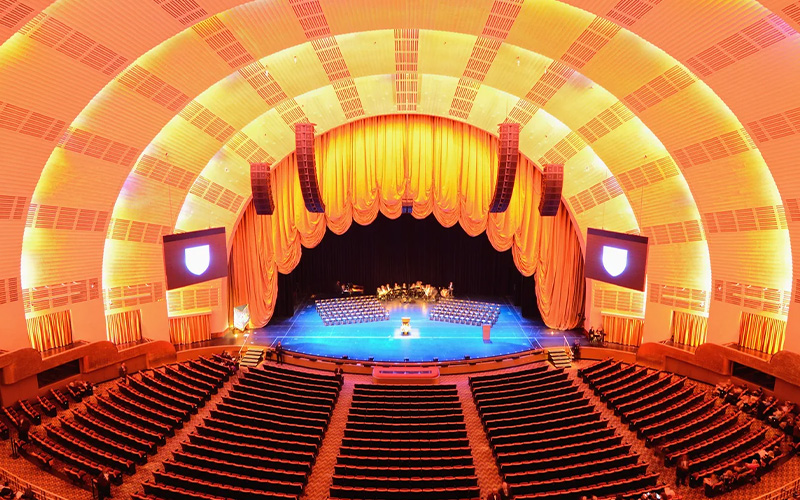
The success of a performing arts venue relies as heavily on its acoustic architecture as it does on stage acting and set production. Theater hall acoustics determine how sound energy propagates, ensuring speech intelligibility, controlling reverberation, and delivering balanced acoustic volume from the orchestra pit to the rear balcony. The architectural envelope must be tailored to these acoustic demands. Spatial geometry, proscenium framing, ceiling rake, and wall splay angles directly govern sound dispersion.
Optimizing these architectural parameters ensures uncolored, authentic sound delivery across every seat. By shaping sound reflections and suppressing flutter echoes, precision theater acoustic engineering guarantees that an actor’s unamplified whisper carries naturally to the furthest tier with pristine clarity and emotional resonance.
Bridging Live Stage Performance with Natural Acoustics
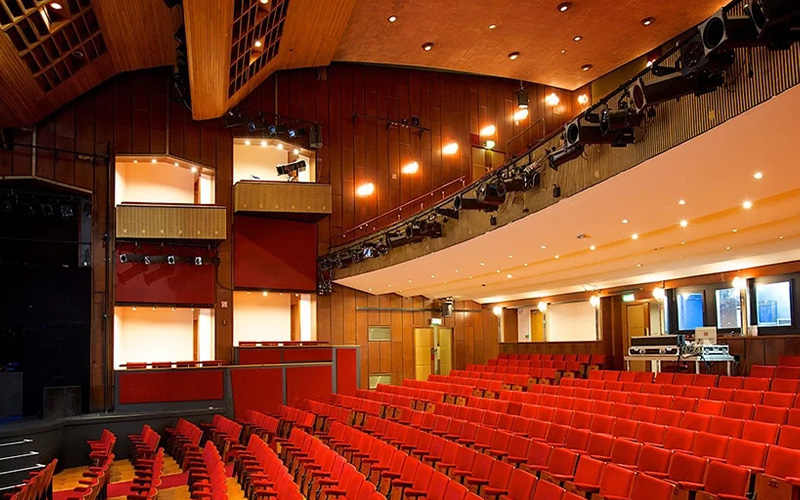
A world-class theater requires a balanced acoustic environment to convey the full dynamic range of live dramatic performances. Acoustic engineering minimizes late reflections, focuses early sound energy, and balances acoustic pressure across the audience plane.
The physical hall architecture and its acoustic treatment must function as an integrated system. Overhead ceiling canopies, mathematically angled wall splays, and optimized volumetric ratios direct primary sound reflections toward the audience. This configuration preserves acoustic energy, ensuring that delicate vocal nuances, dramatic pauses, and complex orchestral scores are heard with absolute clarity across all seating rows.
Elevating Live Drama: Acoustic Architecture That Amplifies Emotional Impact
Acoustic modeling directly shapes the emotional delivery of live theater. Balanced acoustics ensure that every spoken word, subtle inflection, and musical harmony cuts cleanly through ambient background noise. High-performance acoustic design balances sound distribution while suppressing flutter echoes and outside building intrusions.
In dramatic theater, sound carries narrative weight and drives audience immersion. Controlled acoustics allow performers to project their natural voices without strain, knowing their tonal subtleties will reach the audience intact. Optimized sound paths strengthen the physical connection between the stage and the auditorium, drawing theatergoers directly into the scene.
Integrated Theater Acoustics and Electro-Acoustic Sound Systems
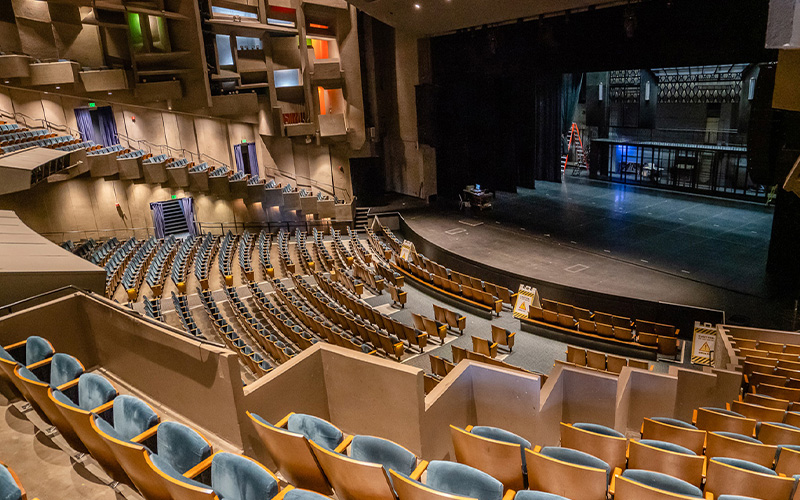
A premier theater combines natural acoustic reinforcement with electro-acoustic sound systems. While acoustic geometry naturally carries spoken dialogue, specialized sound reinforcement is vital for modern musical theater, multi-channel soundscapes, and amplified productions.
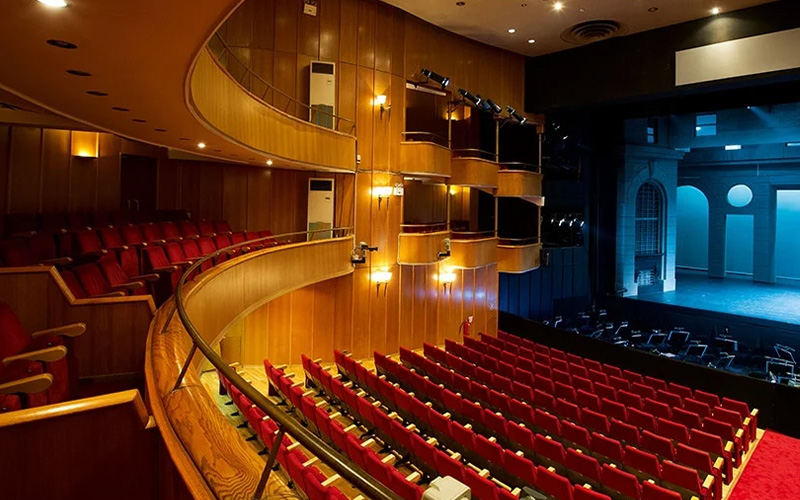
Loudspeaker placement, line array hangs, and under-balcony delay fills must be aligned with interior acoustic cladding. Ceiling reflections, wall absorption zones, and balcony soffit profiles are engineered to prevent destructive phase interference, flutter echo, and hot spots. This calibration ensures seamless sound coverage where electro-acoustic reinforcement augments natural stage presence without drawing attention to the equipment.
Engaging the Audience: Immersion Through Calculated Acoustic Reflection
Superior theater acoustics ensure uniform sound distribution from front-row stalls to upper galleries. This is achieved through calibrated acoustic materials: strategically positioned sound-absorbing panels suppress reverberation build-up, while convex and curved timber diffusers distribute specular reflections evenly.
Audience comfort depends directly on speech intelligibility (STI). Precise ray-tracing calculations and boundary treatments eliminate dead spots and acoustic shadows beneath deep balcony overhangs. Free from listening fatigue and outside mechanical noise, audiences remain fully immersed in the dramatic performance.
Acoustic excellence in theater design transforms a static auditorium into an active acoustic instrument—uniting actors, musicians, and spectators in an engaging auditory experience.
By addressing early reflections, managing low-frequency corner build-up, and decoupling structural noise paths, our radio room engineering establishes an acoustically neutral environment. Studio hosts gain an ergonomic workspace that supports voice preservation during long air shifts, while listeners enjoy a clean, fatigue-free audio experience throughout every broadcast hour.
Theater & Auditorium Acoustic Consulting & Engineering Capabilities
We deliver turnkey acoustic engineering, 3D computer simulations, sound isolation contracting, and custom acoustic millwork for national theaters, municipal opera houses, university auditoriums, and community arts centers. From proscenium acoustic shells and stage fly-tower treatments to orchestra pit dampening and curved timber wall diffusion, we design and deliver high-performance performing arts spaces.