
Industrial & Factory Soundproofing
Control Noise Pollution with Factory Soundproofing
Factory soundproofing is an engineered industrial solution designed to mitigate the extreme decibel levels produced by heavy production machinery and manufacturing operations. Uncontrolled industrial noise damages operator hearing, creates communication hazards, and causes significant environmental disturbance to neighboring communities. Controlling sound energy at the source is vital.
Applying sound-dampening panels, acoustic foam composites, and sound barrier systems across walls, ceilings, and floors minimizes sound wave propagation throughout industrial halls. Furthermore, high-emission machinery can be isolated using custom acoustic enclosures. Industrial acoustic treatment protects occupational health and safety (OHS/OSHA), optimizes working conditions, and ensures full compliance with statutory environmental noise emission regulations. Professional execution controls internal reverberation while minimizing noise spillover into the surrounding environment.
Reduce Factory Noise Levels, Boost Production Efficiency
Industrial soundproofing safeguards worker health and drives operational productivity by dampening mechanical plant noise. Chronic exposure to high decibel levels impairs concentration, accelerates cognitive fatigue, and significantly increases workplace accident rates.
Applying industrial-grade acoustic insulation to perimeter walls, structural roofs, and plant floors blocks airborne transmission and controls harsh reverberation:
Hearing Conservation & Worker Safety: Keeps ambient decibel levels safely below occupational exposure thresholds.
Fewer Operational Errors: Enhances auditory awareness, ensuring safety alarms and critical instructions are heard clearly.
Safer, Healthier Facility Environment: Reduces fatigue-related downtime across demanding industrial shifts.
Permanent Acoustic Solutions for Industrial Noise Pollution
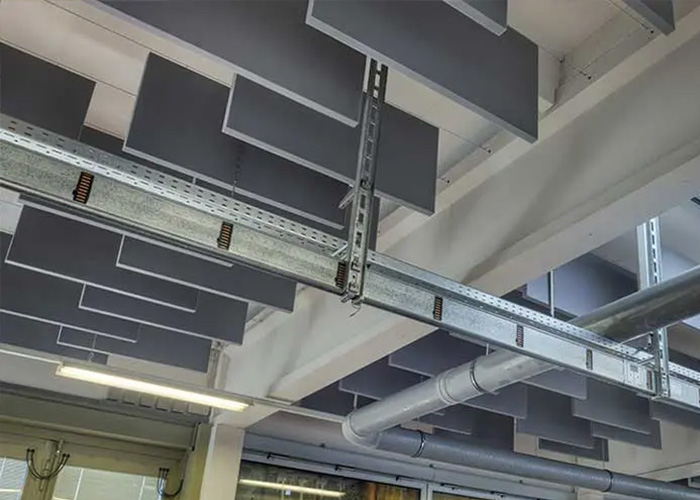
Factory sound insulation provides the most durable, reliable method for taming constant mechanical roar, stamping presses, compressors, and high-velocity air systems. Encapsulating sound sources with acoustic baffles, mass-loaded composite foams, and soundproof machine enclosures isolates peak acoustic energy before it radiates across the plant. This structural mitigation ensures strict compliance with environmental noise limits while fostering safer, more efficient manufacturing workflows.
How Is Factory Soundproofing Implemented?
Industrial soundproofing begins with an on-site acoustic audit and frequency spectrum analysis. Acoustic engineers map sound pressure levels (SPL), locate dominant frequency peaks, assess structural transmission paths, and calculate environmental noise radius:
Acoustic Enclosures & Sound Barriers: Heavy machinery, blowers, generators, and compressors are encased in modular acoustic cabins or shielded behind heavy-duty sound curtains and barrier partitions.
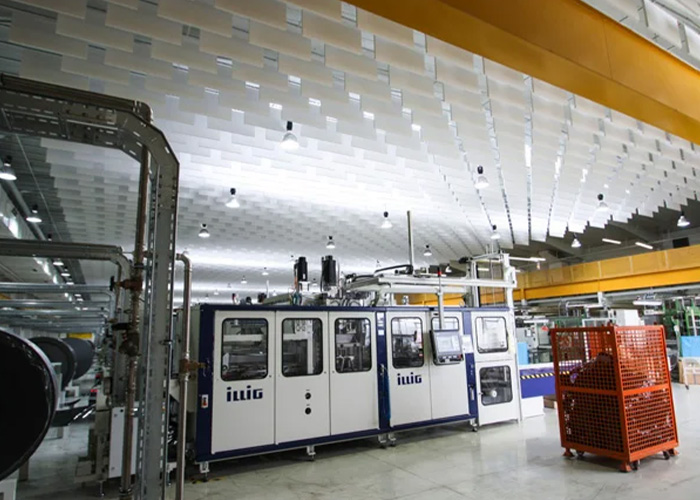
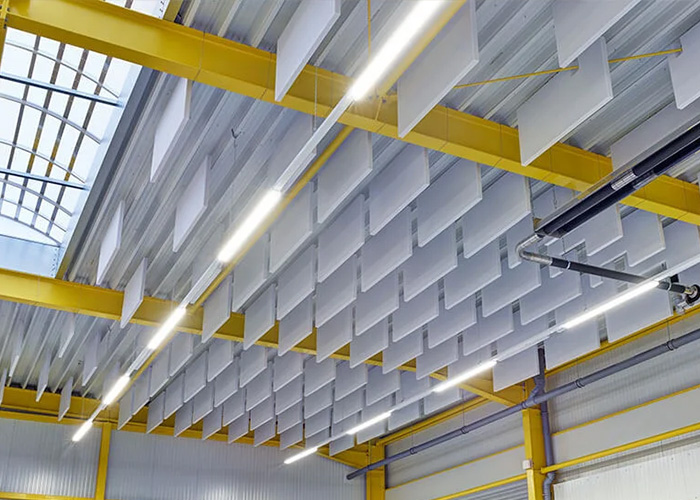
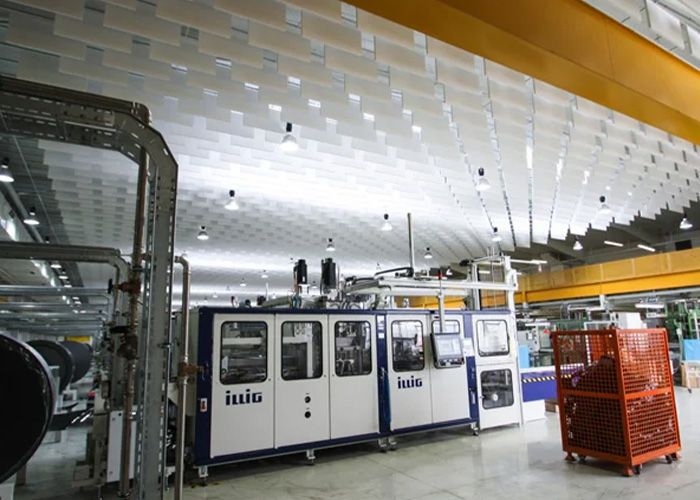
Reverberation Control (Baffles & Wall Panels): High-volume production bays install vertical acoustic ceiling baffles and wall absorbers to eliminate flutter echo and diffuse sound buildup.
Wall & Ceiling Cavity Decoupling: Bonded polyurethane foams (Bondeks/rebonded foam), dense rock wool, and elastomeric sound barriers are installed across building envelopes to halt outward noise transmission.
Vibration Isolation & Subfloor Decoupling: Heavy-duty vibration isolators and under-screed impact rolls decouple heavy stamping machines from structural slabs to curb ground-borne vibrations.
HVAC & Pipeline Silencers: Industrial silencers, acoustic duct wraps, and lagging insulate high-velocity ventilation systems and pneumatic lines, eliminating acoustic flanking bridges.
Materials Used in Industrial Factory Soundproofing
Industrial acoustic applications require resilient, fire-rated materials built to withstand harsh manufacturing conditions while delivering certified transmission loss:
Rebonded Acoustic Foam (Bondeks / Sponge-pan): High-density, open-cell foam engineered for broadband cavity absorption in wall and ceiling assemblies.
Barrier-Bonded Composite Foams: Heavy-duty composite foam featuring an integrated mass-loaded barrier for combined sound absorption and high transmission loss.
Mass-Loaded Vinyl (MLV) & EPDM Sound Barriers: High-mass, flexible viscoelastic membranes that block intense low-to-mid frequency mechanical airborne noise.
Acoustic Membranes & Viscoelastic Damping Sheets: Applied within multi-layer structural panels to dissipate resonant vibrational energy.
Under-Screed Sound Isolation Rolls: Resilient elastomeric underlayment rolls engineered to isolate machine-induced impact noise and structural vibration transfer.
Non-Combustible Rock Wool Infill: High-density mineral fiber cavity insulation offering both acoustic damping and superior fire safety (Class A1 / EN 13501-1).
Decoupled Double-Layer Partitions & Resilient Ceiling Hangers: Spring and elastomer vibration hangers paired with heavy gypsum or steel cladding to break rigid structural noise paths.
Strategically specifying and installing certified industrial acoustic materials guarantees lasting noise control, environmental compliance, and an ergonomic production floor.