
Office Soundproofing
Quieter, More Productive Workspaces with Office Soundproofing
Office soundproofing is an engineered solution designed to eliminate flutter echoes, block exterior noise intrusion, and contain interior sound transmission. In dense open-plan offices and multi-story commercial buildings, managing sound propagation is critical for employee well-being, acoustic comfort, and overall operational efficiency.
Targeted acoustic insulation mitigates cognitive fatigue, protects speech privacy in sensitive discussions, and cultivates a balanced workspace. Applying tailored acoustic treatments across conference rooms, executive suites, and collaborative breakout zones establishes a quiet, high-performance corporate atmosphere.
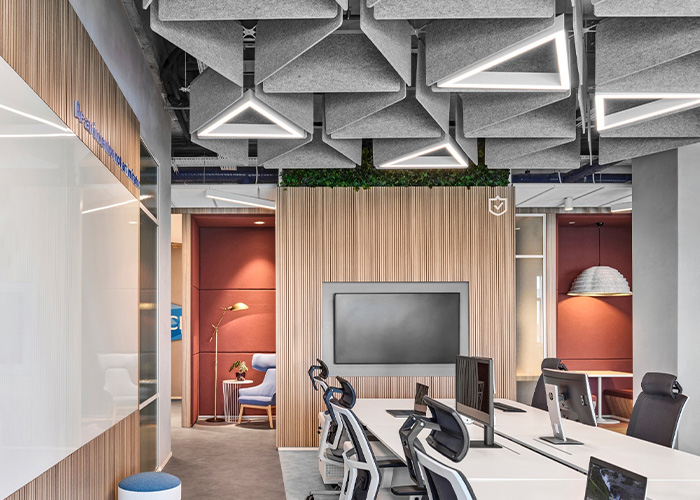
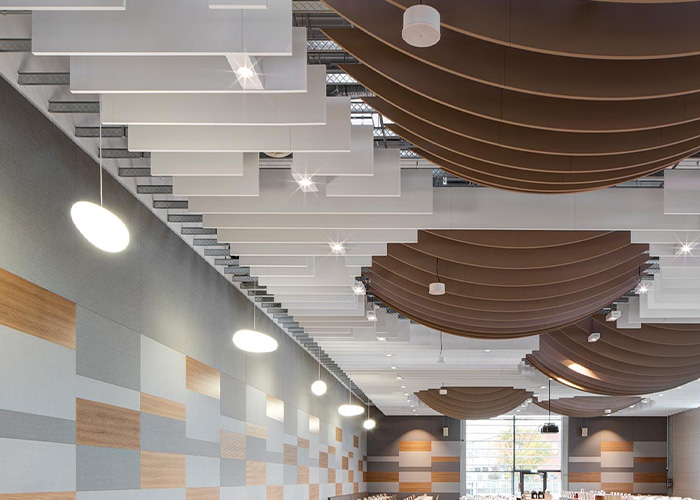
Eliminate Office Noise Pollution: Maximize Acoustic Comfort
Professional soundproofing resolves both external noise pollution—such as street traffic, construction, and mechanical equipment—and interior sound build-up from HVAC systems, office hardware, and cross-talk. Specialized acoustic partitions applied to walls, ceilings, and subfloors create a calm, focused work environment that shields teams from auditory fatigue.
How Is Office Soundproofing Implemented?
Office acoustic isolation begins with an on-site acoustic audit and frequency assessment. Acoustic specialists pinpoint weak transmission points across drywall partitions, ceiling plenums, glazing, and doors.
High-Density Bonded Acoustic Foam (Bondeks / Rebonded Foam): Installed within wall cavity studs and drop-ceiling plenums. Its high density significantly dampens airborne transmission loss across broad frequency spectrums.
Architectural Wall & Ceiling Panels: Installed on visible interior surfaces to control room reverberation (RT60) and eliminate flutter echoes while enhancing interior aesthetics.
Targeted Acoustic Furniture & Dividers: Placed in high-traffic collaborative zones, phone booths, and open desk clusters to localize speech privacy.
During installation, surfaces are prepped, vibration-isolation resilient channels or stud tracks are installed, and high-mass composite barriers are fitted. In critical zones, multi-layered drywall systems with viscoelastic damping compounds are deployed to achieve maximum decibel attenuation.
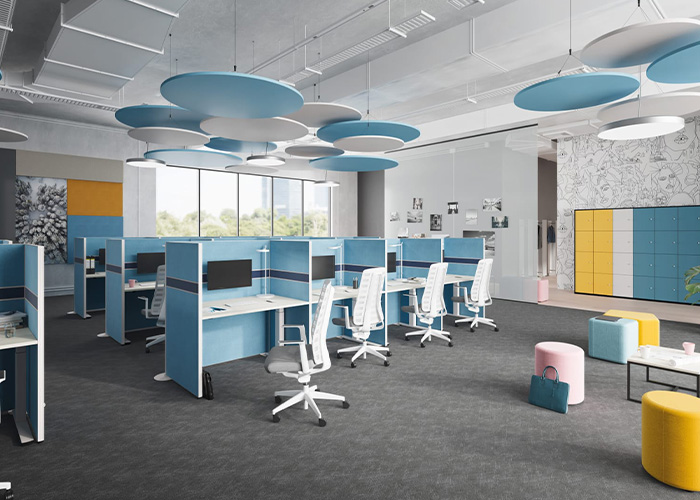
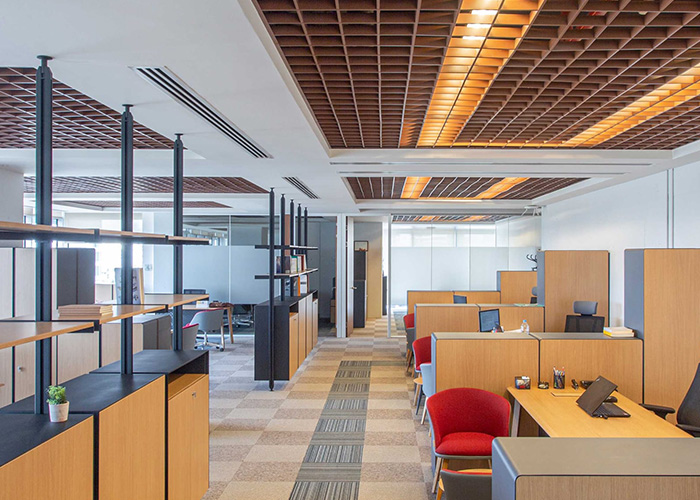
Materials Used in Commercial Office Soundproofing
Achieving laboratory-tested acoustic performance requires certified, high-density materials:
Rebonded Acoustic Foam (Bondeks / Sponge-pan): Open-cell, high-density recycled polyurethane core for cavity insulation.
Mass-Loaded Vinyl (MLV / Heavy EPDM Acoustic Barrier): High-mass viscoelastic membranes that block low-to-mid frequency airborne sound transfer.
Barrier-Bonded Composite Foams: Hybrid panels pairing sound-absorbing bonded foam with an embedded MLV core for dual-action dampening and insulation.
Acoustic Underlayment & Impact Screed Rolls: Resilient under-screed mats that isolate footfall impact noise between building levels.
High-Density Rock Wool Cavity Infill: Non-combustible mineral wool insulation that prevents cavity resonance within drywall partitions.
Decoupled Gypsum Wall Assemblies: Double-layer drywall systems mounted on resilient sound clips to break structural vibration paths.
Acoustic Ceiling Hangers (Vibration Isolators): Spring or elastomer hangers that suspend acoustic ceilings and isolate mechanical plant vibrations.
Deploying the proper combination of acoustic barriers, cavity infills, and interior absorbers delivers a durable, quiet, and highly productive commercial office environment.