
Ceiling Soundproofing
Permanent Solutions for Upstairs Noise
Ceiling soundproofing effectively blocks impact noise (footsteps, moving furniture) and airborne sounds (voices, TV audio) radiating from upper floors. In untreated buildings, ceilings act as acoustic bridges, carrying noise directly into lower living spaces and compromising privacy.
Using decoupled ceiling hangers, high-density bonded foam, rock wool infill, and heavy EPDM sound barriers neutralizes structural vibrations and sound leaks. Professional installation stops upstairs disruptions and elevates overall indoor comfort.
Key Benefits
Complete Sound Isolation: Blocks heavy footfalls and airborne speech between floors.
Acoustic Privacy: Keeps conversations and multimedia sound strictly confidential.
Higher Real Estate Value: Enhances living comfort and premium building standards.
Installation & Materials
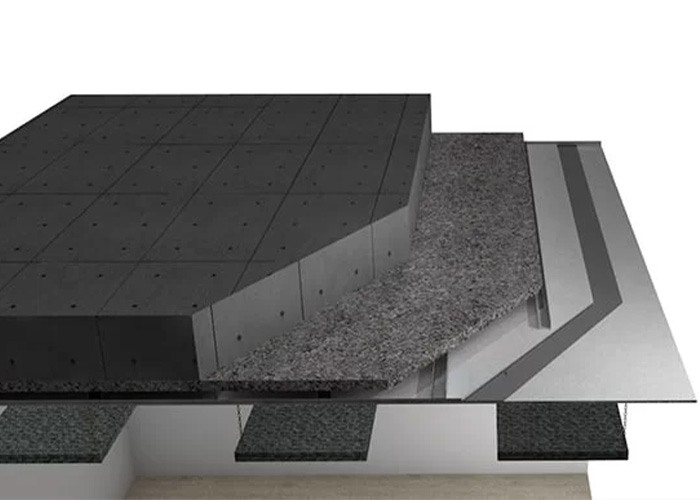
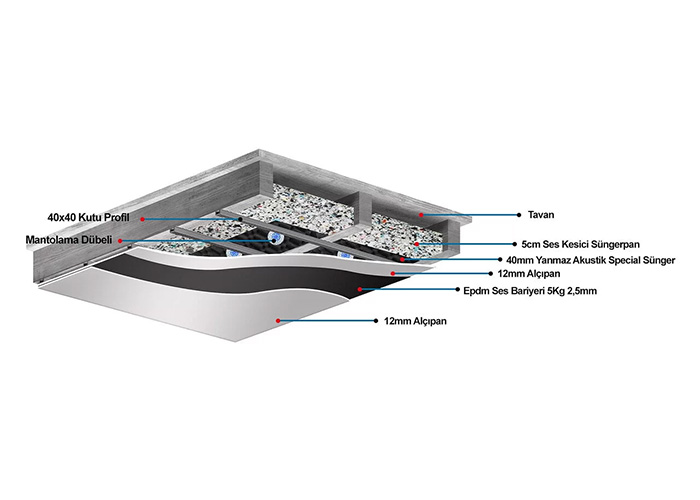
Ceiling isolation begins by decoupling the ceiling framework with vibration hangers to break structural contact. High-density acoustic foam (Bondeks) or rock wool is fitted into the plenum cavity, followed by mass-loaded EPDM barriers and double-layer acoustic drywall sealed with non-hardening caulk.
Rebonded Foam (Bondeks / Sponge-pan): High-density cavity absorption.
EPDM & Barrier-Bonded Foams: Heavy mass barriers blocking airborne sound.
Acoustic Ceiling Hangers: Decouples framing to stop impact vibrations.
Rock Wool Batts & Acoustic Plasterboard: Class A fire-rated mass and dampening.
Create Quiet, Comfortable Spaces with Acoustic Ceiling Insulation
Ceiling soundproofing shields ground and intermediate floors from intrusive upstairs disturbances, transforming busy spaces into calm, private sanctuaries. Suspended acoustic ceilings, vibration-isolated drywall assemblies, and high-performance damping foams stop noise paths at the boundary.
Guaranteed Acoustic Privacy: Prevent conversations and multimedia audio from leaking between floors.
Restorative Living Comfort: Eliminate the stress and sleep disruptions caused by upstairs foot traffic and late-night movement.
Enhanced Real Estate Value: Certified acoustic performance adds measurable value and premium comfort to any residential or commercial interior.
Effective Solutions for Multi-Story Noise Challenges
Ceiling acoustic isolation neutralizes two distinct noise transmission mechanisms:
Impact Noise (Structure-Borne): Vibrational energy from footsteps and dropped items traveling through the building frame.
Airborne Noise: Sound waves traveling through air and penetrating structural voids (voices, televisions, barking pets).
By combining resilient isolation hangers, sound-dampening panels, and acoustic insulation cores, multi-story buildings achieve high Sound Transmission Class (STC) and Impact Insulation Class (IIC) performance ratings.
How Is Ceiling Soundproofing Installed?
Ceiling sound isolation begins with an acoustic diagnostic to evaluate slab density, structural flanking paths, and the exact balance of impact versus airborne noise:
Vibration Decoupling Framework: Resilient acoustic ceiling hangers (elastomer or heavy-duty steel spring isolators) are anchored to the existing slab. A decoupled metal ceiling grid (stud frame) is suspended beneath them, eliminating rigid acoustic bridges.
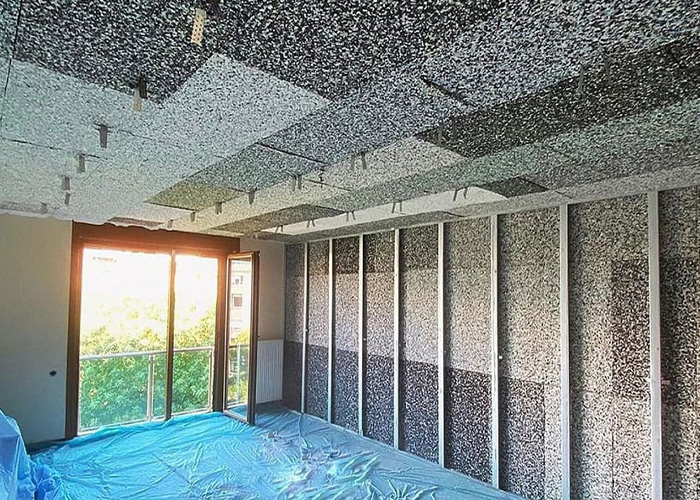
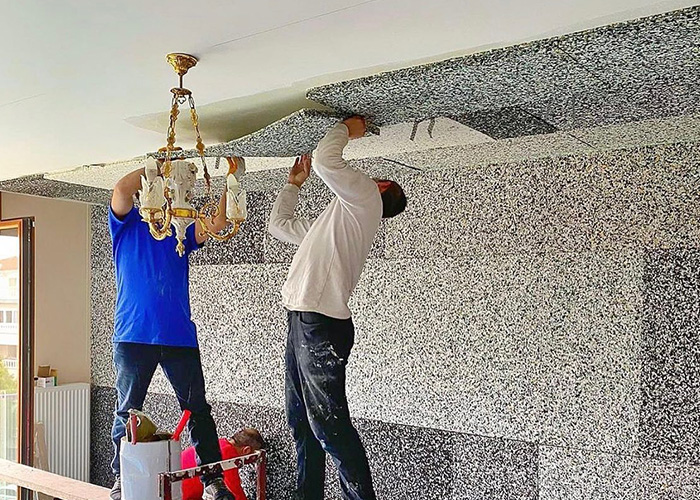
Plenum Cavity Absorption: High-density open-cell rebonded foam (Bondeks) or non-combustible rock wool batts are fitted snugly inside the plenum void to absorb resonant standing waves.
Acoustic Barrier Installation: A high-mass EPDM acoustic barrier or mass-loaded vinyl (MLV) membrane is layered across the framing to provide transmission loss against airborne sound.
Mass Addition & Viscoelastic Damping: A double layer of dense acoustic plasterboard (drywall) is fastened to the decoupled grid, staggered at joints, and treated with viscoelastic damping compounds.
Perimeter Acoustic Caulking: Non-hardening acoustic sealant is applied around all perimeter edges and ceiling fixtures to prevent flanking leaks.