





4000 Perforated Acoustic Wood Panel

Price range: $50.00 through $55.00

4000 Perforated Acoustic Wood Panel

Free Consultation For Your Project!

Subscription Form (#3)

Manufactured by Aksa Wood Panels®, the 2000 Perforated Acoustic Wood Panel is engineered with precision perforation technology to deliver a superior balance of architectural warmth and certified acoustic absorption.

Description

4000 Perforated Acoustic Wood Panel: The Intersection of Aesthetic Elegance and Acoustic Performance

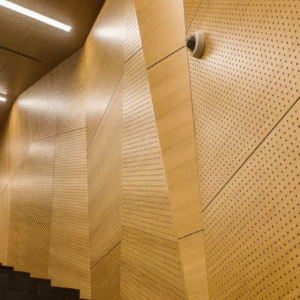
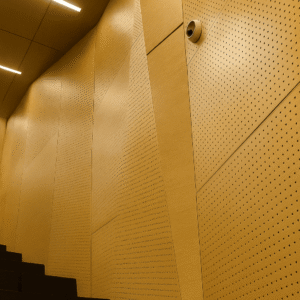
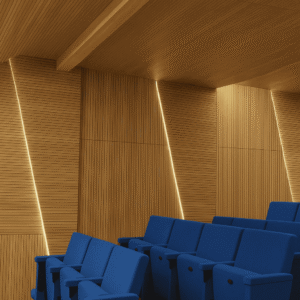
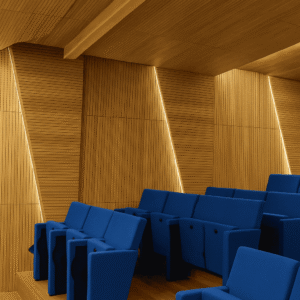
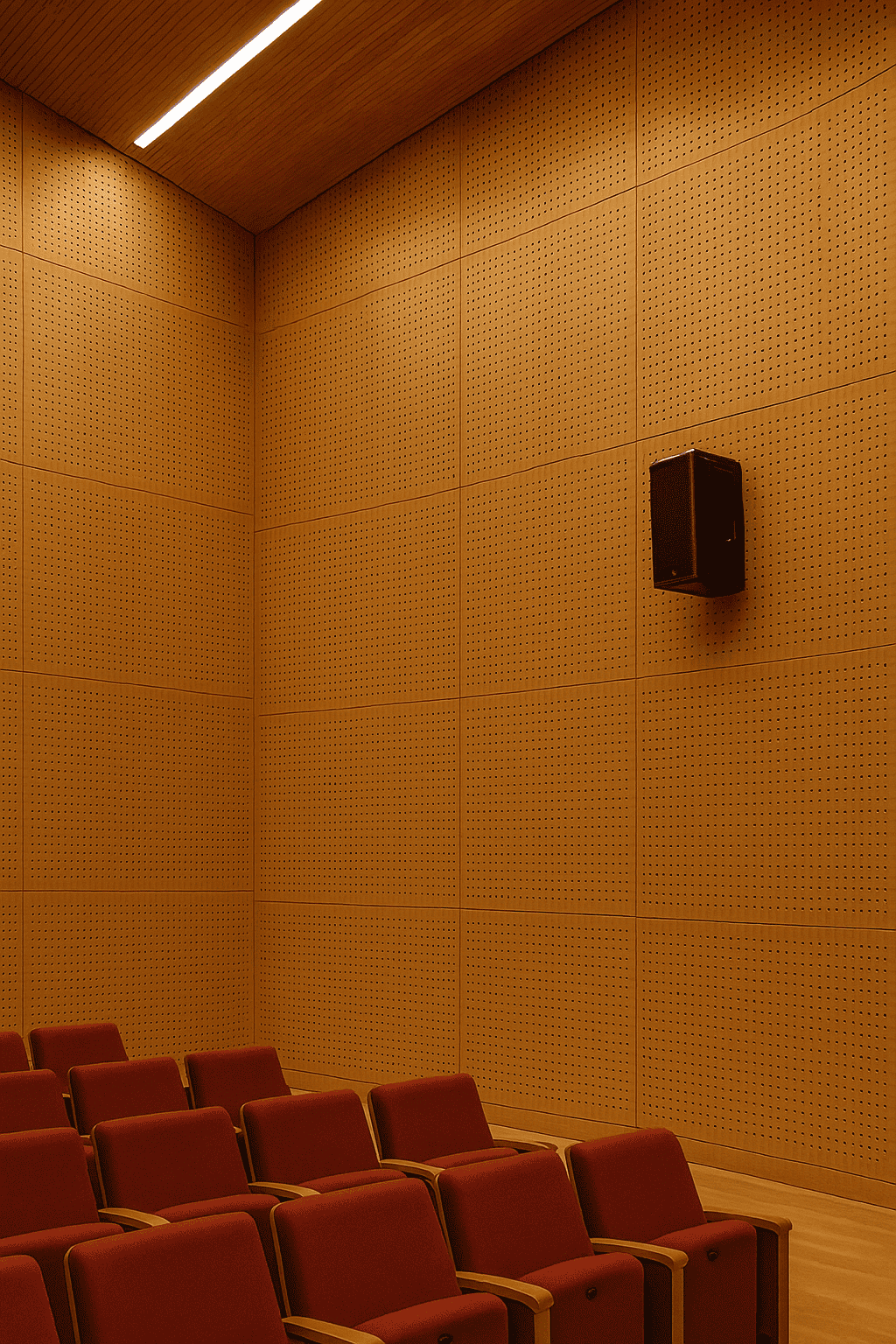
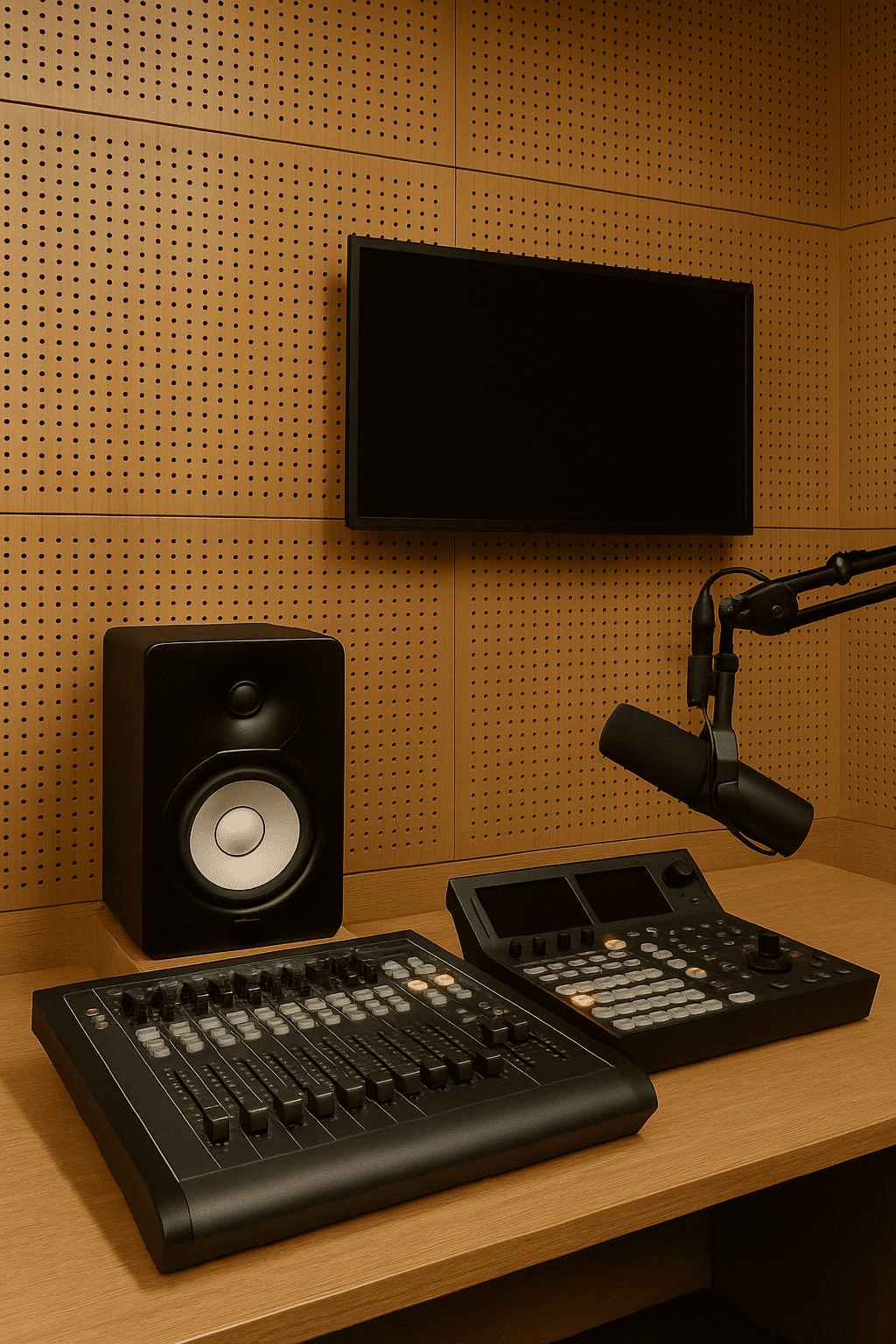
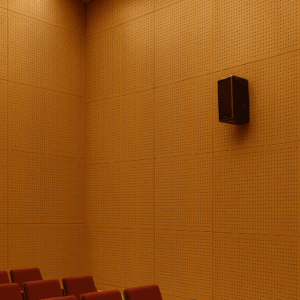
Developed by Aksa Wood Panels®, the 4000 Perforated Acoustic Wood Panel is engineered not merely for sound absorption, but for the precise, controlled redirection and diffusion of acoustic energy. Equipped with precision acoustic timber engineering, this architectural panel delivers acoustic clarity across performance spaces, including conference auditoriums, recording studios, live music rooms, and grand concert halls.

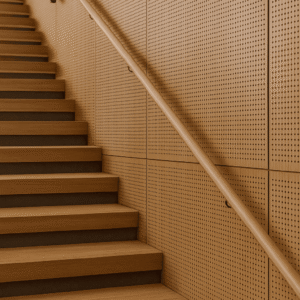
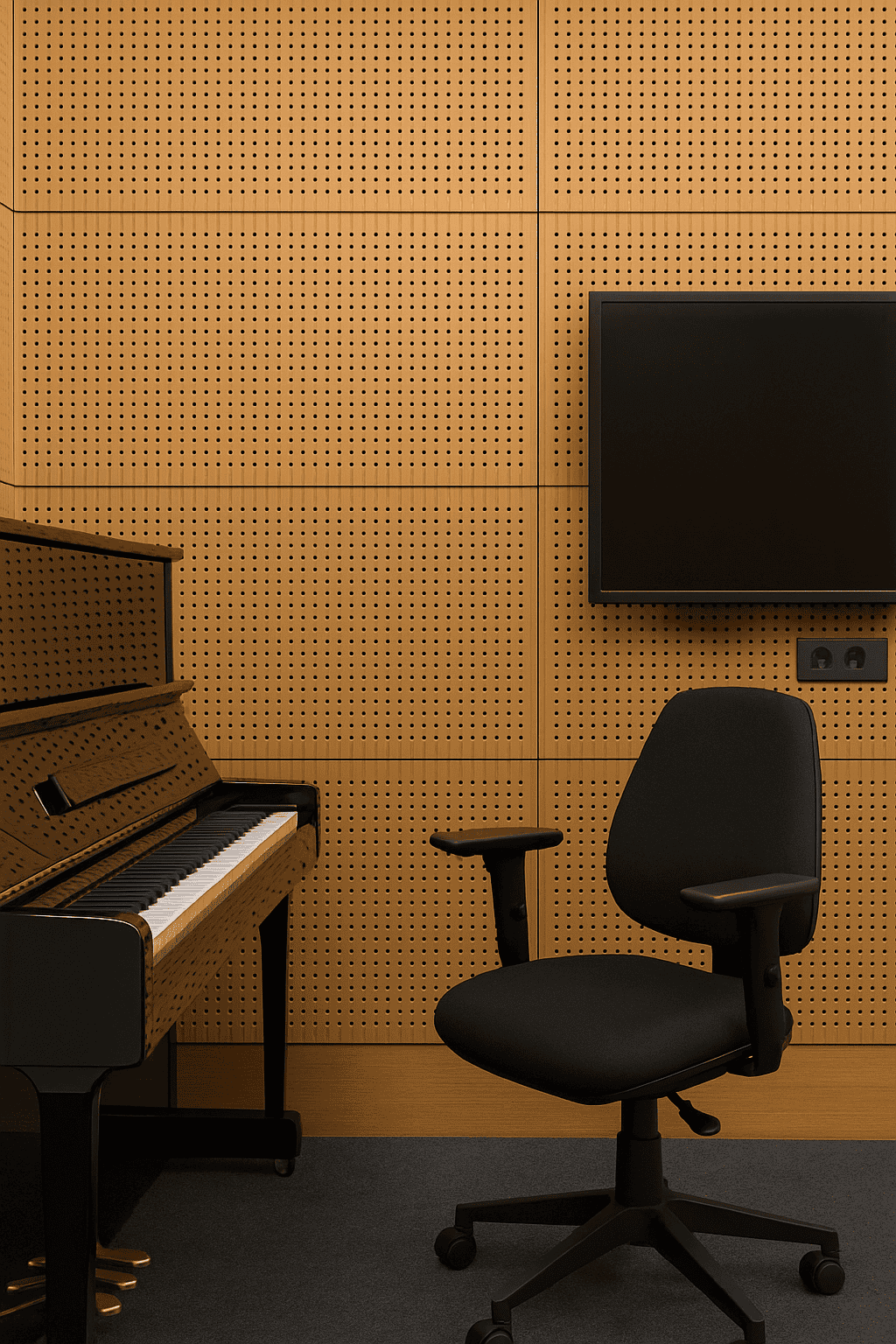
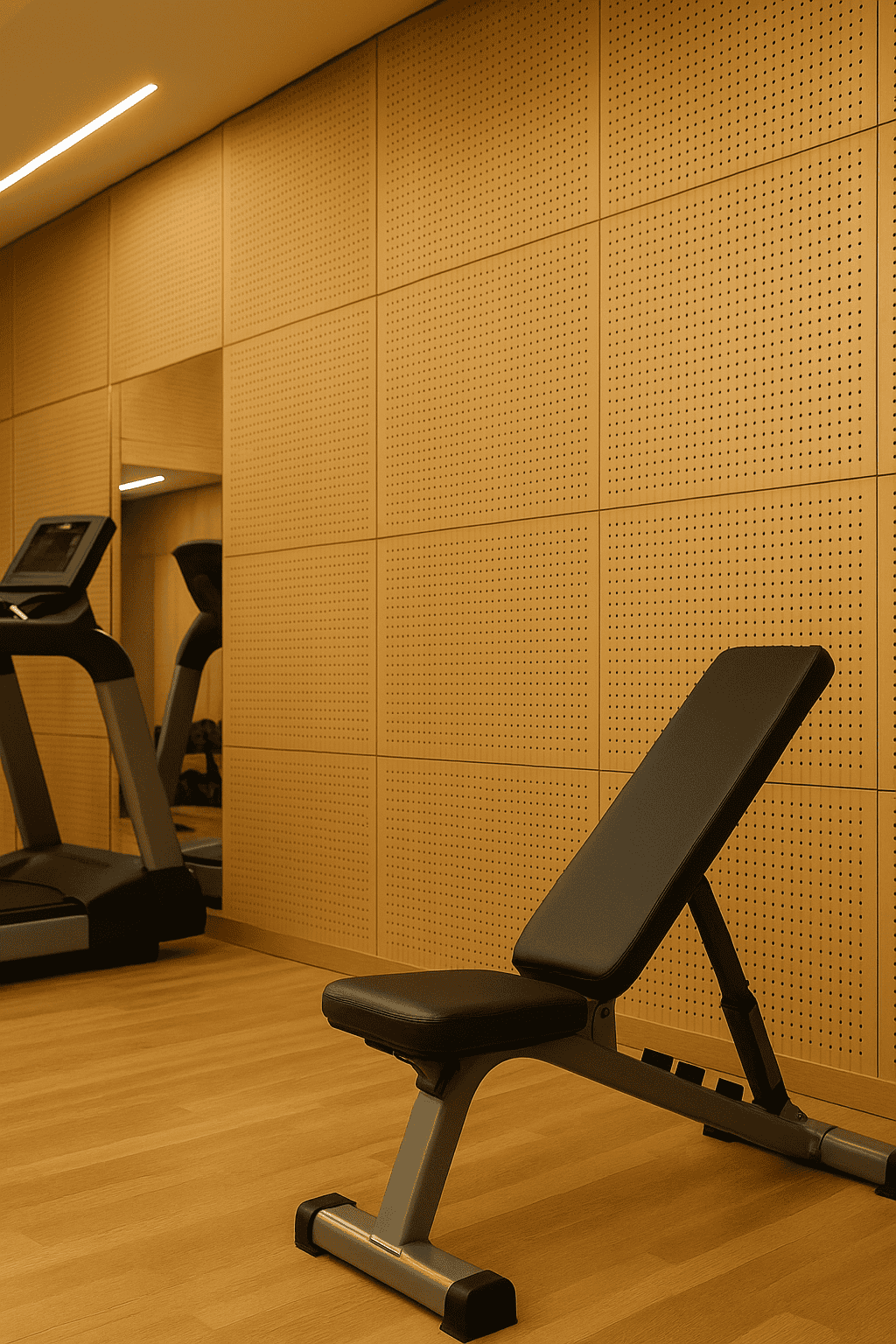
The engineered matrix of 4000 micro-perforations breaks down incident sound waves to suppress flutter echoes and eliminate reverberant build-up, fostering an acoustically balanced sound field. The rigid timber face provides optimal specular reflection alongside cavity absorption, providing an integrated acoustic wall cladding solution that unites acoustic physics with architectural millwork.

Backed with an acoustic non-woven fleece and supported by a high-density rockwool or glass wool cavity infill, the panel enhances sound absorption while providing thermal stability and robust fire resistance. Offered in an extensive palette of natural wood veneers, contemporary melamines, and factory lacquers, it integrates cleanly into interior compositions without disrupting decorative continuity.

Positioned within Aksa’s perforated timber panel series, this system combines rapid installation, long-term durability, and laboratory-tested acoustic performance for modern commercial, institutional, and cultural architecture.

4000 Perforated Acoustic Wood Panel Finish & Veneer Chart

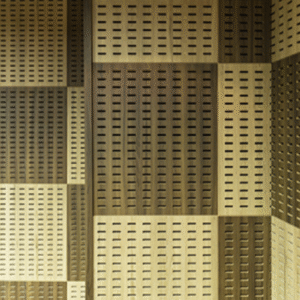
Our 4000 Perforated Wood Panels are available in an extensive selection of authentic natural timber veneers (such as European Oak, American Walnut, Maple, and Ash), modern melamine decors, and custom RAL/NCS polyurethane lacquers. Review our finish chart below to choose the ideal wood grain, edge configuration, and gloss level for your project. Custom perforation diameters, hole patterns, and bespoke panel dimensions are readily available upon request for architectural projects.

Freequently Asked Questions

Applications & Areas of Use

  • Conference facilities, convention centers, and seminar auditoriums
  • Concert halls, orchestral auditoriums, and live music rooms
  • Acoustically treated theaters, auditoriums, and opera houses
  • Executive briefing centers and university lecture halls
  • Civic parliament chambers, council halls, and courthouses
  • Cultural centers, museums, and historic assembly spaces
  • Architectural projects requiring calculated acoustic ray tracing
  • Multi-purpose municipal venues and community auditoriums
  • Private executive presentation rooms in luxury hotels
  • Professional soundstages, recording studios, and live stages
Installation Guide

  • Engineered for direct mechanical anchoring or installation over treated timber battens or concealed aluminum furring channels.
  • Substrate walls and ceiling surfaces must be verified for structural flatness, plumb line, and moisture levels before fixing.
  • Panels are aligned with uniform joint reveals and tight tolerances to preserve continuous wood grain and perforation symmetry.
  • Can be installed with project-specific angling or faceting to direct primary sound reflections toward audience seating.
  • Installed over an air gap backed by high-density rockwool or glass wool to maximize low- and mid-frequency absorption.
  • Panel faces are factory-finished in authentic real wood veneer, high-pressure melamine, or durable polyurethane lacquer.

Technical Specifications

  • Product Name: 4000 Perforated Acoustic Wood Panel
  • Core Substrate: Fire-Retardant MDF or Acoustic-Grade Plywood Core
  • Facing Finishes: Natural Timber Veneer, Melamine Foil, or Custom Polyurethane Lacquer
  • Acoustic Mechanism: High-Density Micro-Perforated Helmholtz Resonance with Rear Sound Fleece
  • Cavity Infill: 50–70 kg/m³ High-Density Rockwool or Glass Wool (Optional/Recommended)
  • Noise Reduction Coefficient (NRC): 0.75 – 0.95 (EN ISO 354 / ASTM C423 Compliant)
  • Mounting Hardware: Concealed Aluminum Splines, Z-Clips, or Tongue & Groove Fastening
  • Fire Safety Rating: Class B-s1, d0 (EN 13501-1) / Class A (ASTM E84 Compliant)
Rather than absorbing sound energy, this wooden panel directs sound waves in a controlled manner to deliver exceptional speech clarity and acoustic equilibrium throughout the space. It is specifically favored in high-end performance and presentation venues.
While sound-absorbing panels trap acoustic energy to eliminate reverberation, reflective panels disperse and redirect sound evenly across the room to maintain natural acoustics. Both serve distinct, complementary purposes within architectural acoustic planning.
Reflective wood panels are ideal for theaters, music rehearsal halls, concert auditoriums, parliamentary chambers, and executive presentation or conference halls where balanced voice distribution is essential.
Yes. The panel surface can be manufactured with genuine natural wood, premium timber veneers, or high-durability melamine finishes depending on project requirements, offering versatile options for custom architectural production.
When mounting panels onto walls or ceilings, the direction and incident angle of sound waves must be precisely calculated. Installation should be performed symmetrically and securely anchored to ensure predictable acoustic reflection paths.
Both internal substrate cores and surface finishes are selected with flame-retardant properties. They can be manufactured to achieve Class A2 fire resistance in compliance with the TS EN 13501-1 standard, satisfying stringent commercial safety codes.
Wooden surfaces can be easily maintained by wiping them gently with a damp microfiber cloth. Abrasive cleaning pads and heavy chemical-laden detergents should be strictly avoided to preserve the protective finish.

Related Products